Trending



Current Read



Enter your email address below and subscribe to our newsletter

A Symphony of Memory and Change

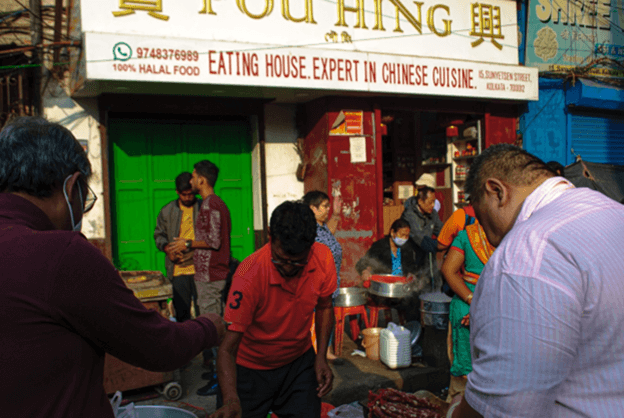
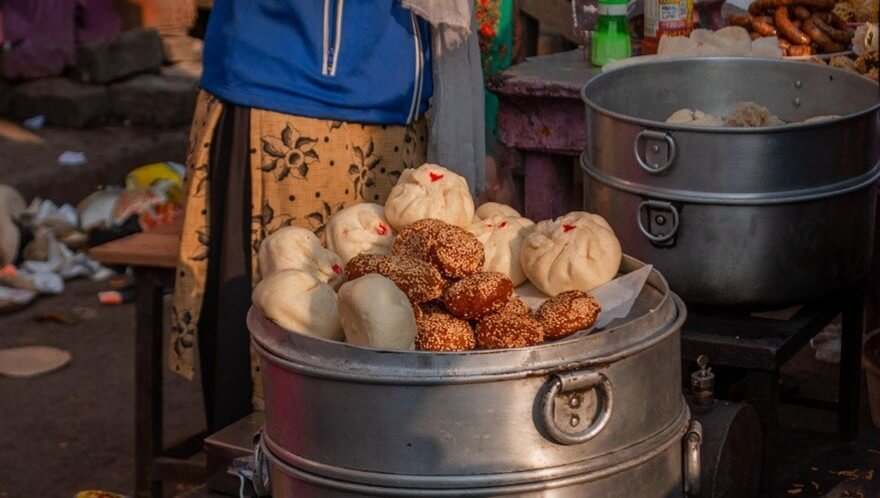
A faded red sign creaks overhead – Hap Hing Co., Chinese provision and medicine store, opened in 1934. The paint has flaked off in places, and the wooden door groans a little when you push it. Just outside the store, Tiretta Bazaar stretches into the morning. The street is waking up. Steam rises in soft clouds from stalls. Baskets of momos and pork buns. People have gathered, sipping broth and chewing on spring rolls. Their clothes pressed. Most of them no longer live here, having moved to Tangra or even abroad, but they return on Sundays, because this is where a lot of it began.
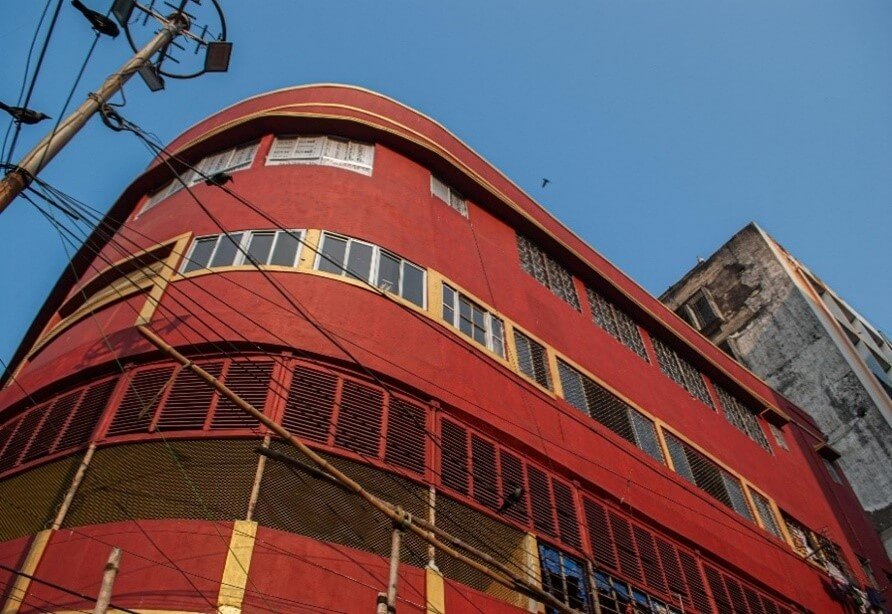
It all began with Tong Atchew, a Cantonese sailor, in the 18th century, when Hastings was the Governor-General. He started a sugar refinery (hence Bengal’s word cheeni for sugar became linked to “Chinese”), but when it failed, his Cantonese workers drifted into Calcutta. Thus, Tiretti Bazaar became a makeshift Chinatown. Over the next century, more Chinese migrants arrived. The Hakka came by the 1800s, working in tanneries; by the early 1900s, many left Tiretti to build a new Chinatown in Tangra.
Memories carry shadows, too. During the Sino-Indian War, the government labelled them as “enemy aliens” overnight. Over 3,000 Chinese-Indians were rounded up and sent to a dusty camp at Deoli, Rajasthan. When they were finally released, they weren’t allowed to go back to Darjeeling or to resume life as before; many ended up dumped here in Kolkata. Entire lives erased from the city’s memory. What remained, often, was the food. Because food, unlike people, was not seen as perilous.
Now, years later, I stroll through Tangra’s lanes, finding the perfect chilli pork, thinking that we have a cuisine that truly belongs to Kolkata. It is neither fully Chinese nor fully Indian, but distinctly ours, the Kolkata–Chinese palate. The version of chilli pork we eat in Kolkata, this glistening, smoky plate that pairs just as well with Hakka noodles as it does with three friends and cheap rum, has its roots in Sichuan. The double-cooked pork there was traditionally boiled, then stir-fried with green garlic shoots. Here, we double-cook too, boil and fry. I am, admittedly, very particular about the cut. I don’t like to pay for pork fat. That 80:20 lean-to-fat ratio is the golden rule, just enough fat to render flavour. If I want pork belly, I’ll order pork belly. But don’t sneak it into my dry chilli pork and call it character.
The Chinese palate, if one can even call it a single entity, makes use of things we rarely see in our city. Choy sum, Bok choy and Sichuan pepper. Watercress and tofu in its many avatars. But here, in the kitchens of Tangra, on the busy footpaths of Gariahat, we stir-fry capsicum, cabbage, and carrots. Vegetables that hold colour and crunch. Then toss it in MSG and let vinegar sing the high notes. The sauces- sweet and sour, hoisin, oyster, black bean, each of these came here with a passport and stayed without one. They are not merely condiments in this cuisine. But we rarely use it the way the Chinese might. Ours is often thicker, sweeter and stickier. In a way more assertive. Szechwan sauce, too, has nearly mythological status, but what we term “Szechwan” here would probably confuse anyone in Sichuan. It’s a brick-red concoction of garlic, ginger, red chillies, and oil, with a more Indian flavour than Chinese. The green chilli sauce is now so common in Kolkata’s street-side restaurants that it feels indigenous. According to Lee from Pou Chong, this sauce was first made by his grandfather in a modest kitchen, long before packets began appearing in shops. Generations of Calcutta households have made it a pantry staple. Mixed with chopped green chillies and, in certain cases, sugar.
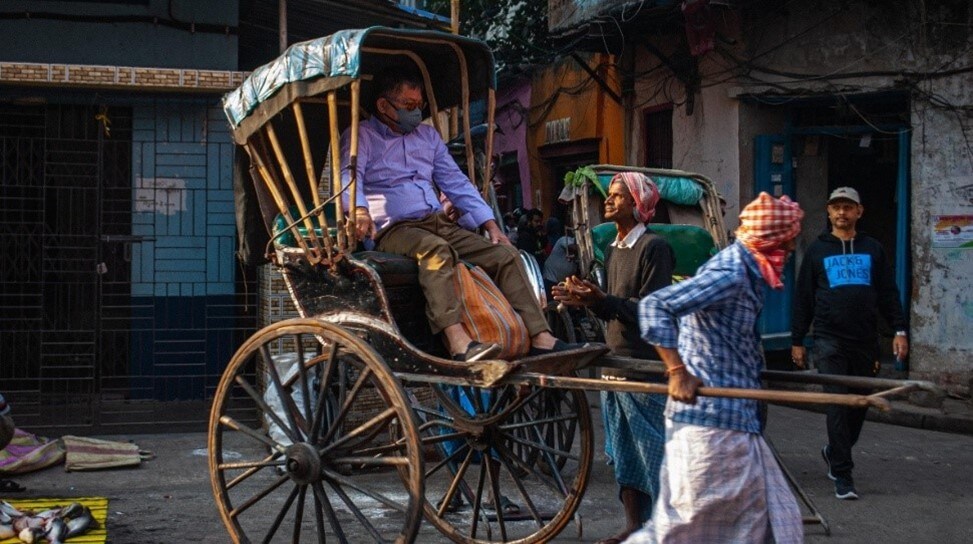
With time, home-cooked meals began to migrate into the public eye. A few enterprising families started offering meals to port workers and British officers. The food adjusted itself gradually. The addition of capsicum. Who eats Chinese without it in Bengal anyway? It was the children of immigrants who brought this food to the pavement, fusing the memory of their grandparents’ recipes with the hustle of city life. They didn’t have the luxury of sourcing pak choi or any wine, so they reached for cabbage. In that act of replacement, street Chinese happened. By the time I was old enough to queue up near Gariahat or Exide crossing, Chinese food had already become something else.
The Huang family has run Eau Chew for four generations, and their menu reflects a commitment not to trend but to memory. You wouldn’t know it from the outside. A fading board and grilled door. They serve “home-style Chinese,” and you’d best not confuse that with what the street stalls do. Personally, I’ve never quite warmed up to the chimney soup at Eau Chew. I respect it, of course. It’s steeped in history, a staple in many Chinese households, and a comfort food for generations.
And then, at the other end of the city, there is Nu Wan Li. Blink and you’ll miss it. A hole-in-the-wall in the truest sense. The place almost reminds you that Chinese food in this city refuses to be boxed into nostalgia. There’s a smoky energy to the place. The chilli has our sharpness. The sweets sour chicken leans more sweet than sour.
Now, all of it circles back to something more than just appetite. I have realised it is really about how recipes travel across borders, across time and across households. Over the decades, the city has absorbed many such communities, leaving behind traces of their tastes and recipes. What we call Kolkata Chinese is really a series of conversations, and through those conversations, something entirely new had emerged. By ten, the morning has thinned out. The lane cleans up after itself. The breakfast crowd has vanished, and the steamers are emptied. The buns that were plump and steaming at sunrise are now packed away or sold out. The food is gone, the conversations have ended, and the sidewalks are swept bare. And above it all, Hap Hing Co. still stands, the sign holding its place above the street like a witness.
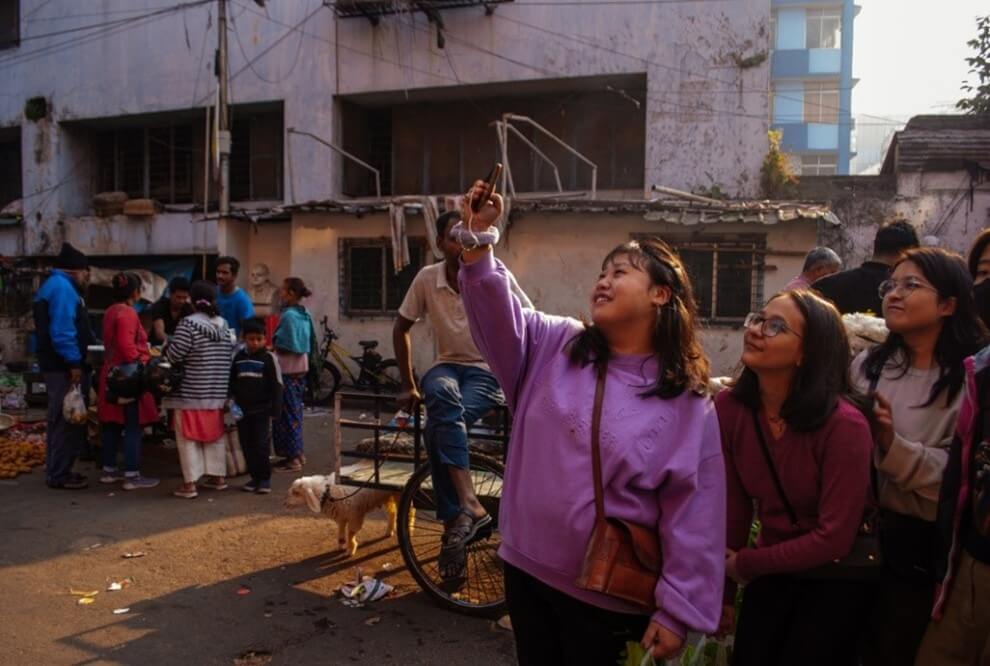

Srijit Das (he/him) is currently pursuing his bachelor’s degree in economics from Jadavpur University. A storyteller at heart, Srijit is drawn to narratives in every form — in films and photographs, in city streets and fleeting conversations. His love for stories is deeply bound to his life in Kolkata, a city of layered histories, weighted memories, complex flavours, and wayward roads. A keen observer and collector of moments, Srijit channels this fascination through photography and a growing engagement with the craft and history of visual storytelling. For him, every frame, word, and gesture hold the possibility of a story waiting to be discovered.


hi srijit, adishree here. this blog/article written by you is one of my best reads till now and clearly will be in all the coming years. its beautifully articulated, the emotions it carries, with such few expressive words you’ve managed to capture my imagination to the fullest. great work