Trending



Enter your email address below and subscribe to our newsletter

A Symphony of Memory and Change

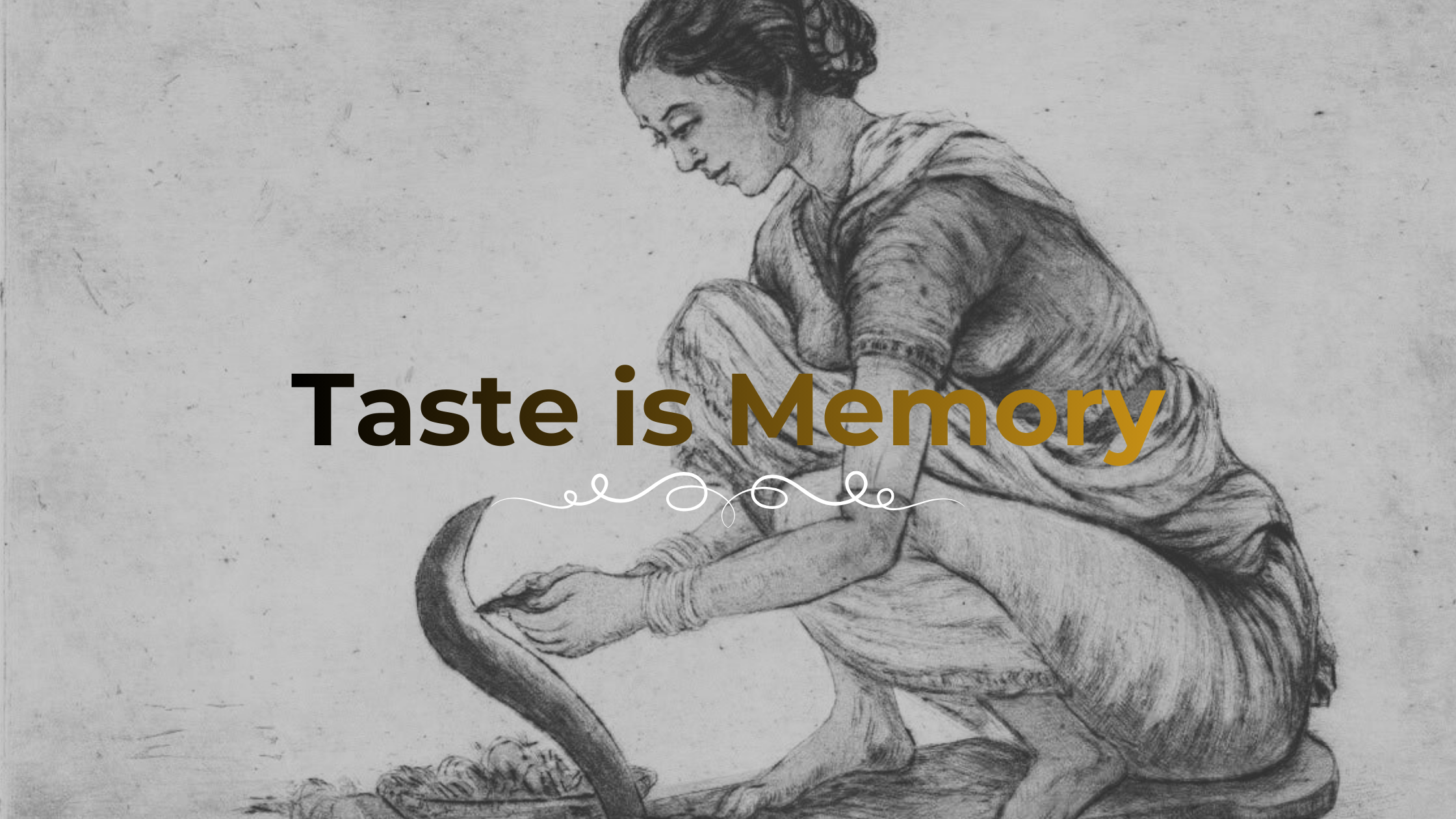
The kitchen is a place which merges diverse ideas and cultures through the medium of food. Born in a Bengali family where most of my family members are victims of the diaspora (the dispersion or migration of people from their original homeland) of the 1970s Bangladesh Civil War, I often see my grandparents reminiscing about those times when their ancestors cooked different delicacies on the eve of special festivities. There’s a proverb in Bengali – Bangalider baro mashe tero parbon (Bengalis have thirteen festivals in twelve months); which means we Bengalis always have some occasion going around the corner throughout the year, and every occasion is demarcated from the other by the food items. The month of April is very special for all Bengalis as it marks the beginning of our New Year (Poila Boishakh—the Bengali New Year). I vividly remember how, every year, my seventy-year-old grandmother would wake me up early in the morning to help her in the kitchen, because this day held special significance in her life This was the very day she met the love of her life, with whom of course she couldn’t reunite, and while we prepared the quintessential Bengali cuisines for breakfast like Luchi (fried puffed bread), Cholar Dal (Bengal gram lentils), she recalled all those times she made him the same breakfast, describing how he smiled as it was one of his favourite dishes.
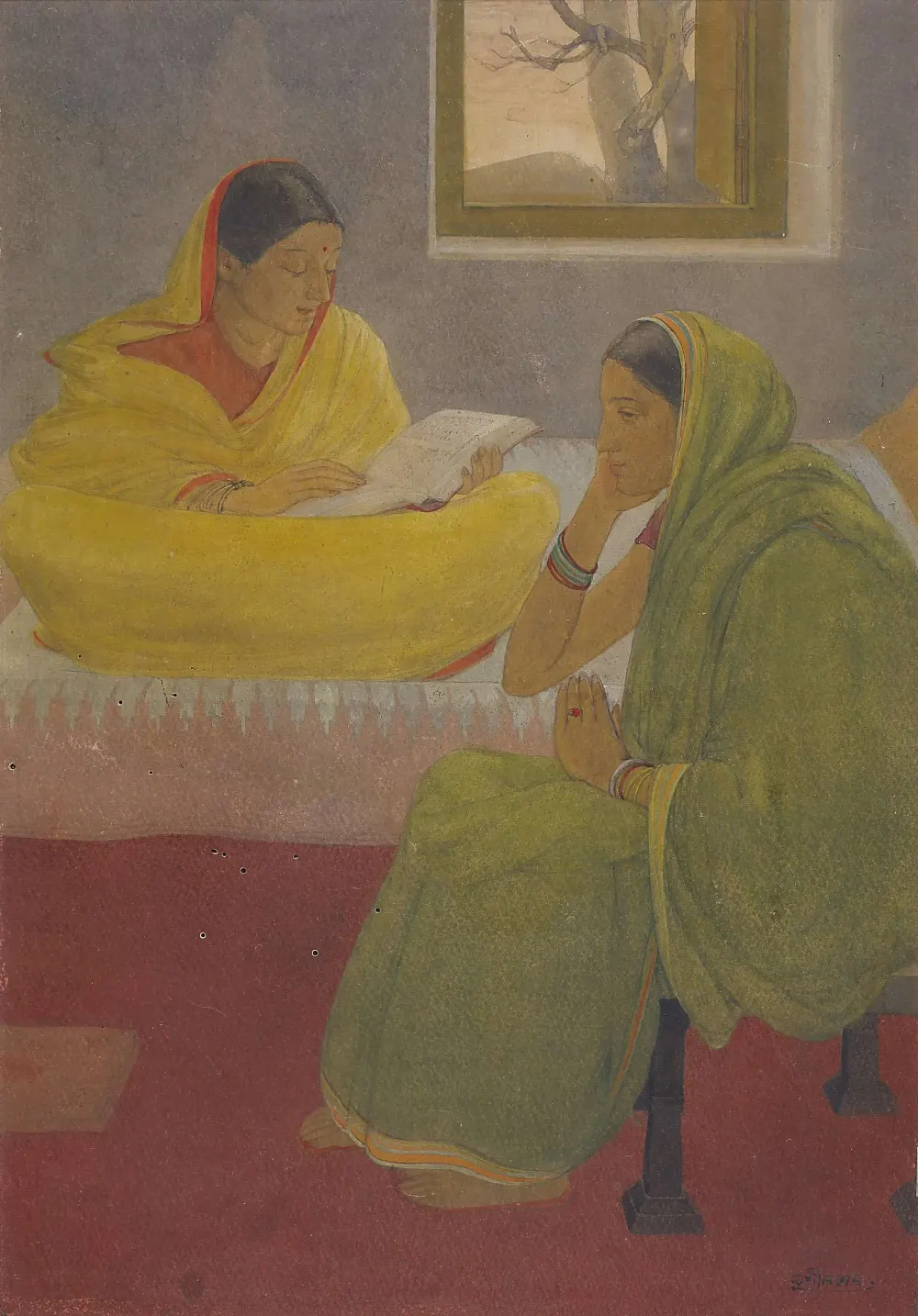
My maternal grandmother, who visits us once in a while, also has her share of stories, and the one which she never gets tired of telling is about the desserts her grandmother and her aunt used to prepare during Poush or Makar Sankranti (one of the winter harvest festivals). This is a festival of desserts celebrated Bengalis on the eve of the Ganga Sagar Mela (a religious fair held at the confluence of the Ganges and the Bay of Bengal). Different kinds of Pithe (traditional rice cakes), which include Chandrapuli, Dudh Puli (milk-filled dumplings), Bhapa Pithe (steamed rice cakes), Patishapta (rice crepes with jaggery and coconut filling), are prepared by my mother every year on this day.She is in a way maybe the last person successfully carrying forward the legacy of her ancestors.My maternal grandmother, whom I address as Dimma, recollects how on this day, relatives usedto flock to their house to eat these lip-smacking delicacies. I am always left in awe listening tothese stories where food and festivals go hand in hand.
Culture revolves around food, and for Bengalis, food serves as heritage. Very few streets of Kolkata are without chaa er dokan (tea stalls), where all Bengalis assemble for their daily dose of adda (casual conversation or gossip). My father, who was born in the 70s and who spent his teenage years in the late 80s and early 90s in Kolkata, always gets excited remembering his college days—how he and his group of friends used to spend hours just having cups of tea and puffing cigarettes – the quintessential catalysts for every intellectual Bengali conversation or debate. It was their way of hanging out, unlike us visiting fancy restaurants and ordering foods of different continents whenever we go out with our friends. The were rooted in their culture and respected it in a way, I feel, and we, being the kids of the Gen-Z era, are gradually losing it. Listening to him creates in me this urge to do the same with my friends, and fortunately, now I do the same and my friends enjoy it equally. So in a way, I am trying my best to preserve my culture.
Bhaat (steamed rice), Ucchey Bhaja (fried bitter gourd), Dal (lentils), Aloo Posto (potatoes in poppy seed paste), Murgir Jhol (chicken curry), Maacher Jhol (fish curry), Aamer Tok (raw mango chutney) is the staple diet of all Bengalis during summer. I prefer Murgi (chicken) over Maach (fish) all the time, however the other members of my family have just the opposite taste, as they prefer fish over anything else. Fish and Bengalis share a close bond over ages, and I often overhear my elders talking of Padma or Paddar Mach (fish from the Padma River), since most of their ancestors hailed from East Bengal. It’s about how fish is a symbol of something sacred or auspicious for every Bengali—that it has become a mandatory item in every Bengali menu on every festivity or occasion. This makes me wonder how food even shapes one entire community’s belief, gradually becoming an integral part of their lives.
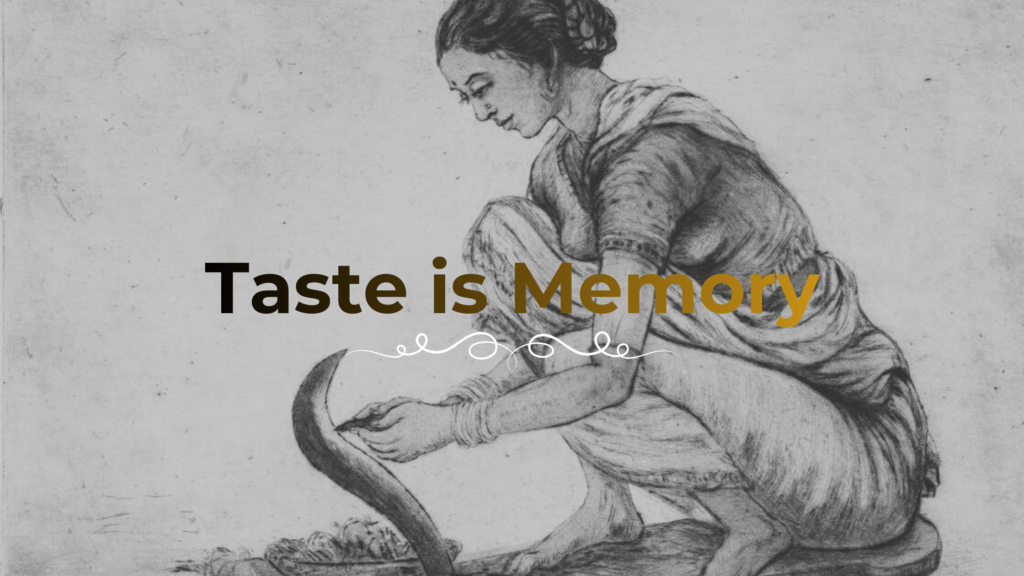
My home is a mixture of the flavours of both East and West Bengal, so it’s Bengal as a whole before the Partition. I have never had any prejudices imposed on me regarding food and I am glad that helped me to respect the diverse cuisines representing diverse cultures. Being a foodie, I am yet to master the art of cooking , and whatever recipes I have heard from my grandmothers and mother, I have jotted all those down in a diary. The diary is a record not only of the recipes but also of the memories attached to each dish, and I feel that good memories always enhance the taste of food. Therefore, taste for me is memory, and after years when I will be preparing the same dishes like my mother or grandmother, maybe I will have my share of memories which I will be narrating to my future generations so that they can carry forward the legacy safeguarding their culture.

Srilekha Mitra has completed her Post-Graduation in English Language and Literature from the University of Calcutta College Street Campus. She has also completed several certificate courses such as Fundamentals of Film Direction(2024) from FTII Pune, The 2024 Tagore Spring Institute from University of California Berkeley, Introduction To Cultural Studies(2024) and Film Appreciation Course(2024) from IIT Madras via NPTEL Swayam securing a silver and gold medal respectively, Post-Qualitative Inquiry Lecture Series(2025) from University of Georgia and Aspects of Cultural Studies(2025) from BHU via INI Swayam. In addition to that she has also qualified UGC NET in the 3rd category(PhD only) twice- in June and December cycles of 2024.
She has worked as a freelance content writer for The Red Sparrow, the films portal of C4E for almost three years and she has also worked as a Public Speaking and Creative Writing Expert for Planet Spark for almost one year nine months. She worked as a volunteer too for Goethe-Institut Kolkata on the eve Wim Wenders’s King of the Roads Tour Kolkata 2025.
Besides everything she is an avid cinephile who dissects films and many of her works have been published and are available in popular websites like Film Companion, Feminism In India, High On Films, Poems India and Youth Ki Awaaz
A few of her poems have been recently published in International magazines and anthologies – 2024 April issue of FemAsia Magazine, International Latin Anthology(A Whole New Perspective on Life – Regeneration Writings about Hope and Beyond), 80th issue named “Dystopia” of Voice and Verse Poetry Magazine. In 2025 her essay “Blue Marble” got published in My India My Gods Volume 1 anthology by Bare Bones Publishing.
Her research interests revolves around Cultural Studies and Film Studies. She is currently working as a NPTEL Pre-Doc Research Fellow in IIT Madras