Trending



Current Read





Enter your email address below and subscribe to our newsletter

A Symphony of Memory and Change

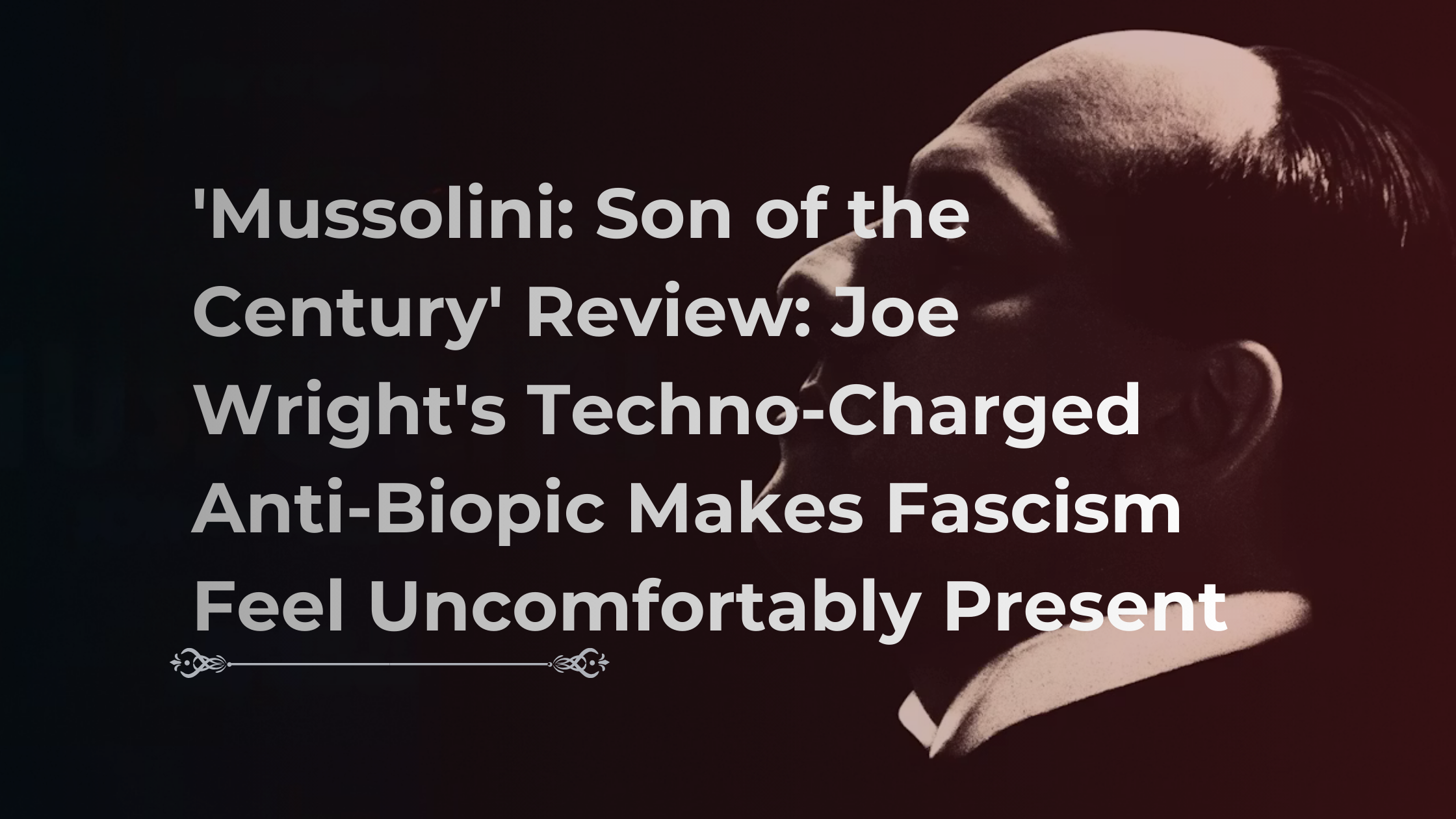
There are historical dramas that politely invite you into the past. Then there’s Mussolini: Son of the Century, which kicks the door off its hinges, grabs you by the collar and insists you look directly at the machinery of authoritarian seduction—preferably while a pulsing electronic score thunders beneath torchlit rallies.
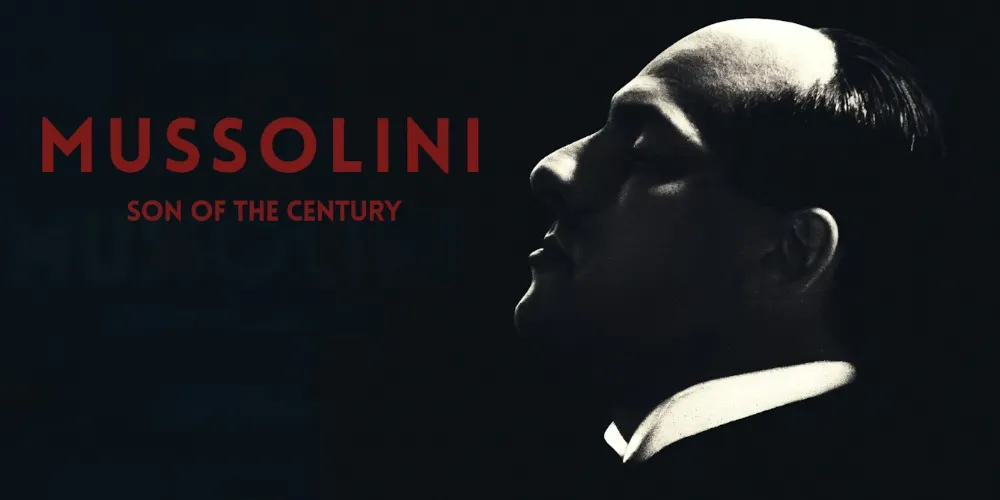
Now streaming on MUBI, Joe Wright’s eight-part limited series chronicles Benito Mussolini’s transformation from socialist journalist to Italy’s dictator amid the political chaos of the early 1920s. But “chronicles” isn’t quite the correct verb for a show this aggressively stylised. Wright doesn’t present Mussolini as a distant subject under glass; he presents him as a performer in a spotlight—one who turns to the camera, courts the viewer, and dares us to notice when we start leaning in.
That choice is both the series’ most bracing insight and its most significant risk.
A dictator as emcee
The series covers the period from the founding of the Fascism in 1919 through the Matteotti assassination and the parliamentary moment that hardens Italy’s slide into dictatorship. Those beats are familiar to students of the era. Still, the delivery mechanism is not: Son of the Century frequently uses direct address, letting Mussolini narrate, justify, flatter, needle and—crucially—reframe what you’re seeing as if history were merely a hostile edit he’s finally correcting.
Wright has spoken about letting audiences feel the pull of charisma rather than treating historical villains as untouchable monsters. In practice, the show operates like a controlled exposure: you’re meant to register how quickly grievance can become spectacle, how opportunism can pass for conviction, how the “buffoon” can become the strongman. Reuters noted that the series even begins in a more lightly comic register before the Blackshirts’ violence asserts itself.
It’s a structural provocation: the series doesn’t simply tell you that democracies can be gamed; it dramatizes the tempo at which people (and institutions) decide they’d rather be entertained than vigilant.
Style as argument—and as temptation
Wright has never been accused of underselling a shot, and here he turns maximalism into a thesis. The show rejects “stuffy period drama” restraint, pairing early-20th-century pageantry with a modern electronic pulse from Chemical Brothers member Tom Rowlands. The result can feel like a history lesson remixed into a nightclub warning siren: the rhythms of persuasion become the rhythms of editing; the pageantry of power becomes a literal staging of performance.
This isn’t mere flash. When Mussolini speaks into the lens, the series also explores the media: how political identity is manufactured, how messaging becomes ritualised, and how crowds transform into a chorus. Even the show’s reported approach to authenticity—folding in historically sourced speeches—adds to that friction between spectacle and documentation.
But there’s a knife-edge here. The more the series weaponises propulsion, the more it risks recreating the same gravitational pull it’s trying to critique. Pajiba’s review of the show’s early episodes argues that the saturation of filmmaking can leave too little room for introspection, raising an uncomfortable question: when you make violence look thrilling as “commentary,” do you really control what the audience absorbs?
The Los Angeles Review of Books makes a related point from another angle: high production quality and a larger-than-life frame can blur the line between dramatizing history and mythologizing it—especially when the protagonist is given privileged access to the viewer through theatrical asides.
Wright seems aware of the danger. The series’s very concept functions as a dare: it asks whether we, raised on antiheroes and prestige-TV intimacy bully, who sense which way the room is tilting and charge into it as if it were his idea.
The supporting cast—figures like Margherita Sarfatti (Barbara Chichiarelli) and Rachele Mussolini (Benedetta Cimatti), among others—helps locate the human collateral around the cult of personality, even when the series’ formal obsession with Mussolini-as-narrator threatens to turn everyone else into orbiting evidence.
And that’s one of the show’s most uncomfortable achievements: it can make you feel how a room might have felt when a demagogue was “on,” while also revealing how quickly that electricity becomes permission—permission to intimidate, to rationalise, to look away.
The contemporary echo isn’t subtle—and it isn’t supposed to be
The series’s present-tense urgency has been part of its conversation since before it reached MUBI. Reuters framed Wright’s interest as tied to the renewed visibility of far-right movements and the persistence of “false narratives” about Mussolini. Other coverage notes how the series deliberately courts modern parallels; Le Monde points to an explicitly anachronistic slogan moment that collapses 1920s Italy into today’s political rhetoric.
The point isn’t that history repeats with carbon-copy villains. It’s that the tactics—spectacle, grievance, media manipulation, strategic violence—are durable. And Son of the Century is determined to show those tactics as lived experience, not textbook abstraction.
So, does it work?
Yes—often brilliantly. The series is bold enough to refuse the comfort of tasteful distance, and bright enough to recognise that “never again” becomes meaningless if we won’t look at the how. Between the direct-to-camera confessionals, the anachronistic sonic aggression, and the sense of history accelerating toward catastrophe, Wright makes a case that fascism isn’t merely an ideology—it’s a performance that recruits its audience.
But it’s also a show that flirts with the same danger it’s diagnosing. When the filmmaking is this adrenalised, the critique can start to feel like complicity—particularly for viewers conditioned to read visual swagger as endorsement. The series may be aiming to “pull the rug out,” but some viewers will still admire the rug.
That’s not a deal breaker. It’s the work’s central tension—and arguably its most honest one.
Mussolini: Son of the Century is a ferocious, formally restless limited series—part historical drama, part media autopsy, part antihero trap—anchored by a performance that understands charisma as a weapon. It’s not comfortable viewing, and it isn’t meant to be. If you’re looking for a safe, museum-like biopic, look elsewhere. If you want a series that makes the seduction of authoritarianism feel disturbingly legible—and refuses to flatter the viewer for recognising it—Wright’s is a jolt worth taking.

Dr. Sabarna Roy is a decorated, critically acclaimed, and bestselling author of 12 literary works and 3 technical works. He is the Chief Technology Officer at an Iron & Steel Company in Kolkata.