Trending



Current Read



Enter your email address below and subscribe to our newsletter

A Symphony of Memory and Change

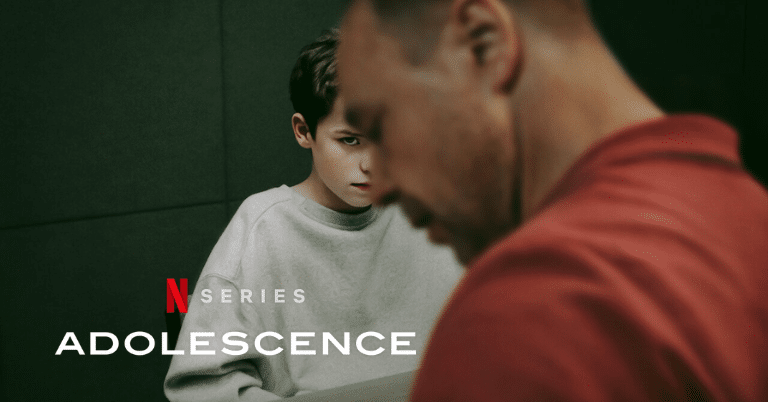
Vulnerability studies explicate how individuals or certain groups are othered by pre-existing power structures, relational imbalance or personal struggles. It involves identifying and analysing the frailties of individuals, systemic forces. It also depicts how vulnerability can lead someone to consequences that can prove to be detrimental. Adolescence is a psychological crime drama series created by Jack Thorne along with Stephen Graham and directed by Philip Barantini. The entire series throws light on the vulnerability that gen-z kids undergo during their teenage years, and unearths the toxicity fuelled by the overuse of online spaces.
There’s inherent coping mechanism within all of us that makes us mask our flaws, insecurities because we are ashamed of being vulnerable. Vulnerability is equated with weakness and therefore boys mostly avoid being vulnerable thinking that it will be a blotch on their masculinity. At times they therefore resort to violence in order to release their repressed emotions.
During adolescence physical and hormonal changes takes place that make the teenage years a volatile period. These changes lead to body image issues and emotional vulnerability. In episode 3 of the series in a conversation between Jamie and her behavioural therapist, Jamie divulges that Katie’s nudes had been leaked by a boy called Fidget. He doesn’t hesitate to admit that the whole disturbing incident made him sad, because he wouldn’t be able to obtain nudes anymore. The first question that should is raised is why Katie sent her nude to her classmate. It can be deduced that Katie might have had body image issues, which points out to the fact that she was insecure about the way she looks. And, therefore it’s this desire to feel seen and validated that led her do such an act. Coming to Jamie’s response, it’s been seen that whenever Briony asks Jamie about his feelings towards women and sexual liaisons, he fabricates stories of his sexual encounter with women, and later admits that he was lying. He confesses that he and his group of friends are quite unpopular in school. During adolescence, teenagers often struggle to find a stable sense of self. Jamie is a victim of the same and his indifference and denial towards the crime of murdering his classmate, is his attempt to mask his emotional vulnerability.
We’ll come back to episode 3, where Briony attempts to deconstruct Jamie’s intentions behind his brutal crime by taking out the printouts of Jamie’s social media posts. She shows Katie’s comments under the post. Jamie further admits that he tried to be there for Katie during this tumultuous phase of her life, assuming that during her weak mental state, his emotional support might translate to likeness towards him, but instead she rejects, as well as bullies him calling him an incel on social media. Incel culture by nature is a part of internet culture. One of the most important symbols in the incel community is the idea of ‘red pill’ or a ‘blue pill’ . This metaphor is taken from the 1999 movie The Matrix starring Keanu Reeves where his character Neo must choose between taking a blue pill which will keep him in a state of peaceful ignorance or the red pill which will awaken him to an uncomfortable but enlightening reality. For “incels”, the reality presented to them by the red pill is that love and sexual satisfaction are commodities that women deny them, and women are the controllers of the sexual facets of society. “Incel” is also considered as a portmanteau of involuntary celibate. Jamie claims that he doesn’t believe in incel ideology, and, therefore when he experiences this kind of cyber bulling, it aggravates his anger.
In episode 2 of the series when DI Bascombe and DS Frank visits Jamie’s school, Bascombe’s own son Adam, who is a student of the same school, in his conversation with his father points out Katie’s emoji laden comment in Jamie’s Instagram post. Thus, enlightening his father on how each emoji connotates different meanings, and all these are part of the manosphere culture. Adam’s knowledge about “incel”, “red pill”, and manosphere makes it clear that such instances of bullying are quite prevalent among his peers. These incidents also unmask the gender radicalisation promoted through online spaces.
Schools are supposed to mould a student’s personality by teaching them moral values. So, what does one do when the school becomes a medium that allows the endorsement of power structures within pupils? In episode 2 of the series when DI Bascombe and DS Frank visits Jamie’s school, they are subjected to chaos. The teachers are indifferent and ignorant while the students are not only non-cooperative but also aggressive, violent and extremely vulnerable. During a standard drill exercise when all the students were brought onto the grounds, Katie’s best friend Jade attacks one of Jamie’s best friends named Ryan. Instead of stopping Jade, the other students burst into laughter simultaneously making videos of the incident. The whole instance depicts a lack of empathy, and respect among the students at the school, which can be considered a failure on part of the school. It is this reckless and nonchalant guidance that allows students to be vile, committing malicious deeds as they aren’t provided any lessons about conscience, and moral compass.
In episode 3 Jamie is transferred to the Standing Secure Training Centre where he is kept under psychiatric evaluation. In this episode, his conversations with his behavioural therapist Briony Ashton are regarded significant. During these conversations the viewers, along with Briony, delve deeper into the dark unexplored corners of Jamie’s mind. Briony tries to let Jamie open up about his grandfather, father, and his opinions on masculinity. Jamie’s aggression is visible and can be felt, but he replies that his father loves him. However, he has let him down by not being able to excel in any kind of sports. As Briony follows Jamie up with more questions regarding his father and grandfather, it triggers his vulnerability, and being intimidated he finally flares up in rage, shouting and swearing at her incessantly. This entire chain of conversation followed by Jamie’s rage, shows that he enjoys dominance over his female counterpart, and idealizes his father. But his idealization stops there. He doesn’t idealize his mother. Like millions of young boys, he too, is a product of the patriarchal society that feeds on the brains of teenagers like him. Steeped in chauvinist ideologies, he doesn’t hesitate to label his female counterpart Katie as “bitch” because he can’t process and handle rejection, which is a hurt to his male ego. Towards the end of this episode when Jamie’s psychologist tells him that this is going to be their last session, he begs to be heard, pleading, “Don’t you even like me a bit?”. As the station official drags him away, Jamie screams, “Just tell my dad I’m alright”.
Jamie isn’t the only one responsible for his actions, equally responsible is his school and the pernicious environment in which he has been raised.
In the episode 4, on the eve of his father, Eddie’s birthday, Jamie after wishing his father, reveals to him that he has decided to plead guilty. His father’s flickering attempts to free his son, imagining that he is innocent, gets crushed. In the aftermath of the call we see both his parents are devastated trying to fathom where did their parenting go wrong. From their conversation, it’s evident that Jamie spent most of his time confined in his room in front of his computer. While his father made sure not to be an overbearing parent like his grandfather, thus giving his son, a private space, he failed to realize that too much of space for a teenager often leads to corruption of the mind. Without the parental supervision, it can prove to be deleterious for a delicate mind of a vulnerable child.
In the final scene of the series, an emotionally vulnerable and defeated Eddie enters Jamie’s room. Holding his teddy bear he sobs bitterly burying his face, the teddy bear, symbolic of the innocence that his little boy once possessed. The teddy therefore acts as the last knot that ties Eddie with that version of his son, uncorrupted. He apologizes whispering into the ears of the teddy, “Sorry son, I should’ve done better.” This final scene is Eddie’s acceptance of the grim reality that he has to move on, and failure on the part of his parenting.
All of the four episodes are shot in a single take which requires meticulous preparation and hard work. By filming it in real time, eliminating the comfort of cuts or scene transitions, the series amplifies all the emotions and the horror that the characters undergo.
Adolescence and vulnerability go hand in hand, in a world plagued by incel culture, cancel culture, it’s our responsibility to preserve the innocence of teenagers like Jamie by protecting them from such cultural corruption, and instead empower them by infusing in them kindness and empathy.`

Srilekha Mitra has completed her Post-Graduation in English Language and Literature from the University of Calcutta College Street Campus. She has also completed several certificate courses such as Fundamentals of Film Direction(2024) from FTII Pune, The 2024 Tagore Spring Institute from University of California Berkeley, Introduction To Cultural Studies(2024) and Film Appreciation Course(2024) from IIT Madras via NPTEL Swayam securing a silver and gold medal respectively, Post-Qualitative Inquiry Lecture Series(2025) from University of Georgia and Aspects of Cultural Studies(2025) from BHU via INI Swayam. In addition to that she has also qualified UGC NET in the 3rd category(PhD only) twice- in June and December cycles of 2024.
She has worked as a freelance content writer for The Red Sparrow, the films portal of C4E for almost three years and she has also worked as a Public Speaking and Creative Writing Expert for Planet Spark for almost one year nine months. She worked as a volunteer too for Goethe-Institut Kolkata on the eve Wim Wenders’s King of the Roads Tour Kolkata 2025.
Besides everything she is an avid cinephile who dissects films and many of her works have been published and are available in popular websites like Film Companion, Feminism In India, High On Films, Poems India and Youth Ki Awaaz
A few of her poems have been recently published in International magazines and anthologies – 2024 April issue of FemAsia Magazine, International Latin Anthology(A Whole New Perspective on Life – Regeneration Writings about Hope and Beyond), 80th issue named “Dystopia” of Voice and Verse Poetry Magazine. In 2025 her essay “Blue Marble” got published in My India My Gods Volume 1 anthology by Bare Bones Publishing.
Her research interests revolves around Cultural Studies and Film Studies. She is currently working as a NPTEL Pre-Doc Research Fellow in IIT Madras