Trending



Enter your email address below and subscribe to our newsletter

A Symphony of Memory and Change

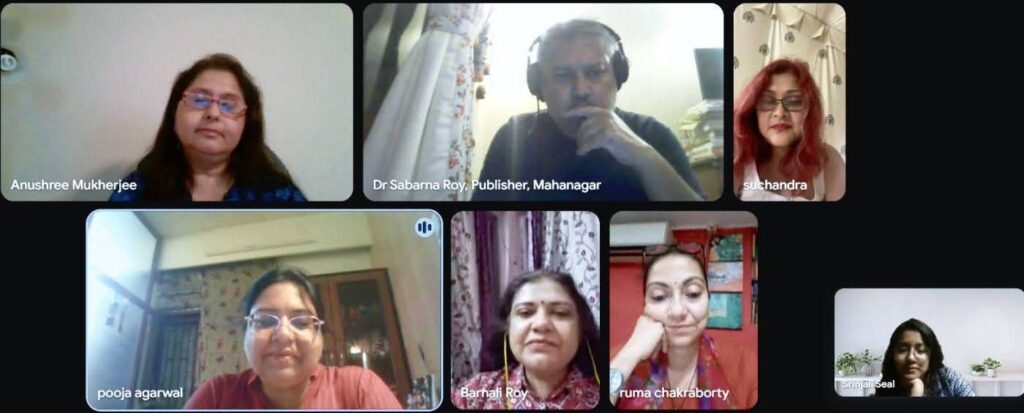
The 27th of March, 2026, marks a special day for our magazine that started with a dream. We hosted the first Mahanagar Novella Award 2026, attended by our top five shortlisted participants, hosted by our publisher, Dr. Sabarna Roy, and our editor, Srinjali Seal. The evening was one for recognising the brilliance of the authors who had shown dedication and the mastery of their craft. It began with the introductions, gradually moving on to the announcement of the winner and the runner-up by Dr. Roy, followed by smiles and inspiration from the fellow participants.
Given below is a detailed review of the top five novellas for the competition:
The format is treated as narrative structure/organization, and modernity of format as freshness/innovation of form. These are subjective literary judgments.
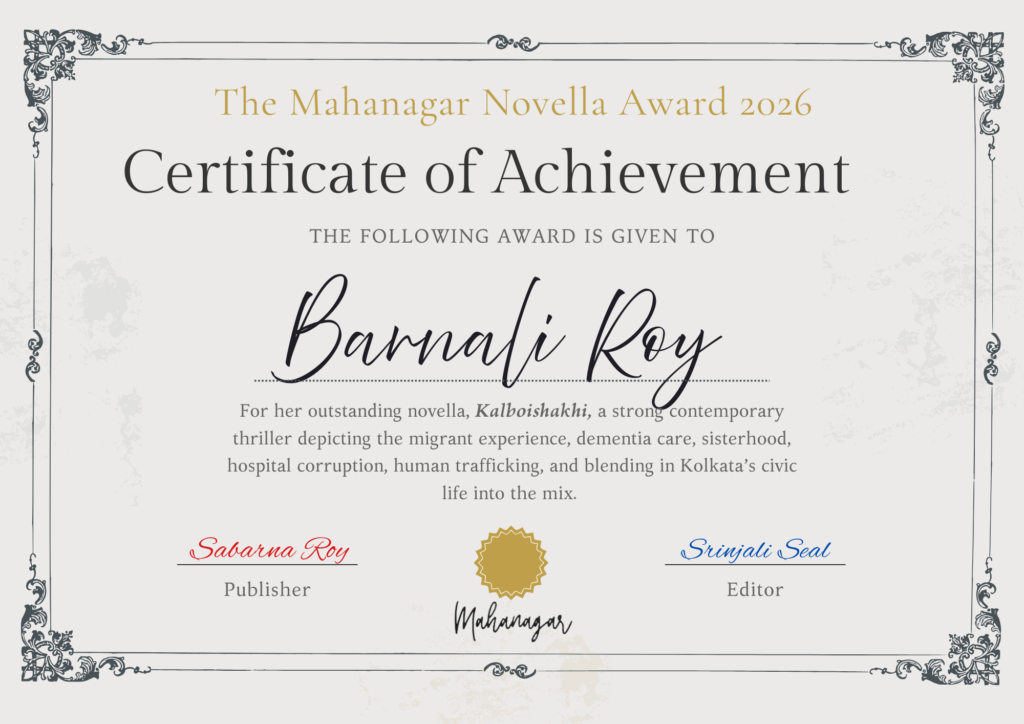
Content: 9.0/10
Richness of subject: 9.0/10 Quality of conversations: 8.5/10 Format: 8.5/10
Modernity of format: 8.5/10 Aggregate: 43.5/50
Why it ranks first: this is the most balanced novella of the set. It combines migrant experience, dementia care, sisterhood, hospital corruption, organ trafficking, and Kolkata’s civic-festive life into a strong contemporary social thriller; the diary sections also add structural variety without weakening momentum.
Content: 8.0/10
Richness of subject: 9.5/10 Quality of conversations: 7.5/10 Format: 8.5/10
Modernity of format: 9.5/10 Aggregate: 43.0/50
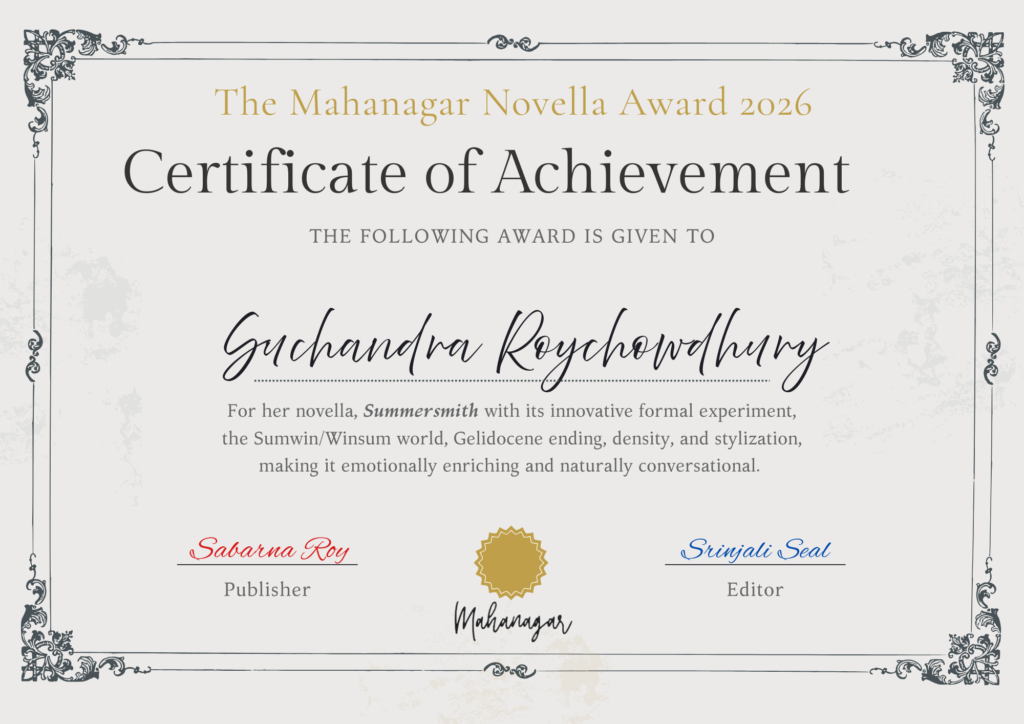
Why it ranks second: this is the boldest formal experiment among the five. Its Sumwin/Winsum world, revived billboard characters, steampunk vehicle, and Gelidocene ending make it conceptually rich and highly original; I placed it just below Kalboishakhi because its density and stylization sometimes outpace emotional clarity and conversational naturalness.
Content: 8.5/10
Richness of subject: 9.0/10 Quality of conversations: 7.5/10 Format: 8.5/10
Modernity of format: 8.5/10 Aggregate: 42.0/50
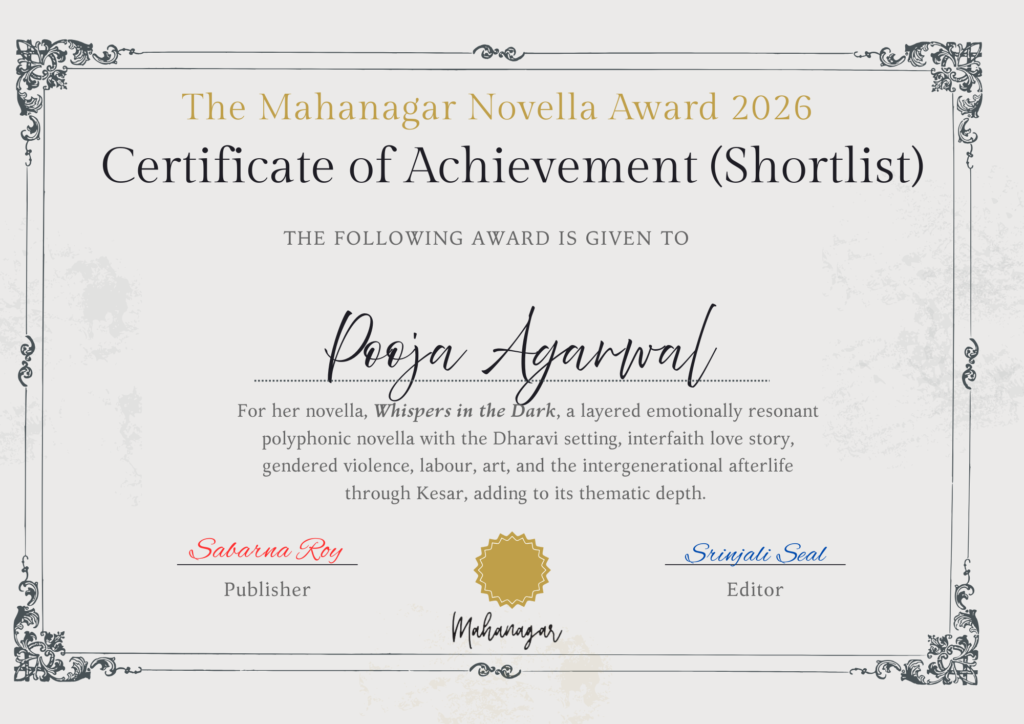
Why it ranks third: a layered, emotionally resonant polyphonic novella. The Dharavi setting, interfaith love story, gendered violence, labour, art, and intergenerational afterlife through Kesar give it real thematic depth; its conversation score is slightly lower only because much of its force comes through interior, reflective voice rather than extended scene-based dialogue.
Content: 8.5/10
Richness of subject: 8.5/10 Quality of conversations: 8.5/10 Format: 8.0/10
Modernity of format: 7.5/10 Aggregate: 41.0/50
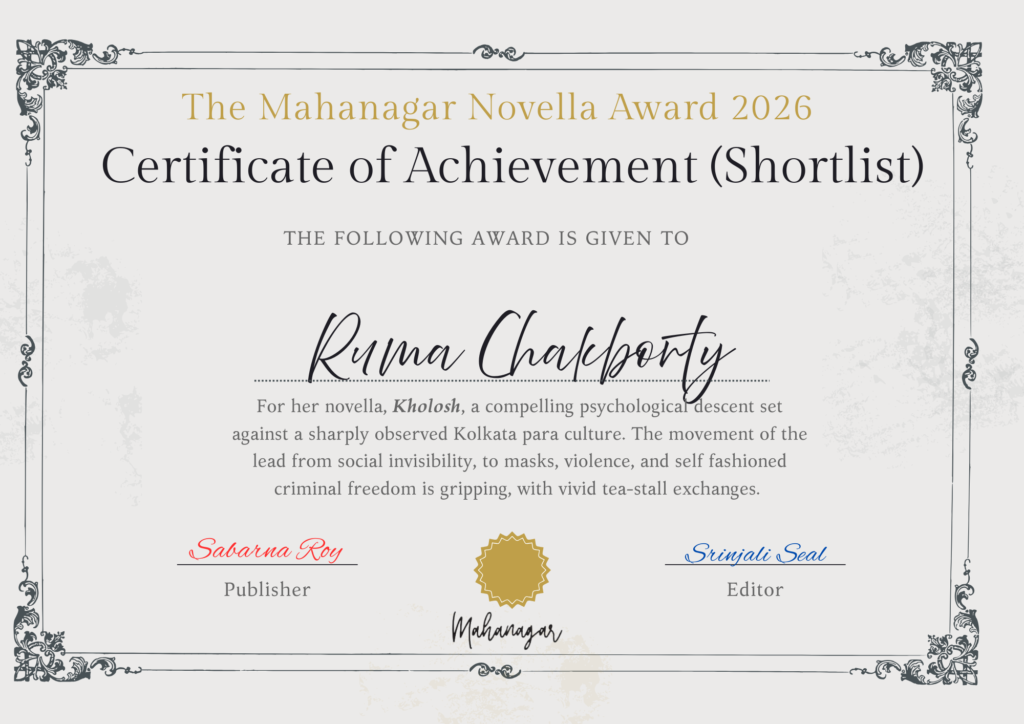
Why it ranks fourth: this is a compelling psychological descent set against a sharply observed Kolkata para culture. Tuku’s movement from social invisibility to masks, violence, and self- fashioned criminal freedom is gripping, and the tea-stall exchanges are vivid; the form, though effective, is more conventional and thematically narrower than the top three.
Content: 7.5/10
Richness of subject: 8.5/10 Quality of conversations: 7.0/10 Format: 7.5/10
Modernity of format: 7.5/10 Aggregate: 38.0/50
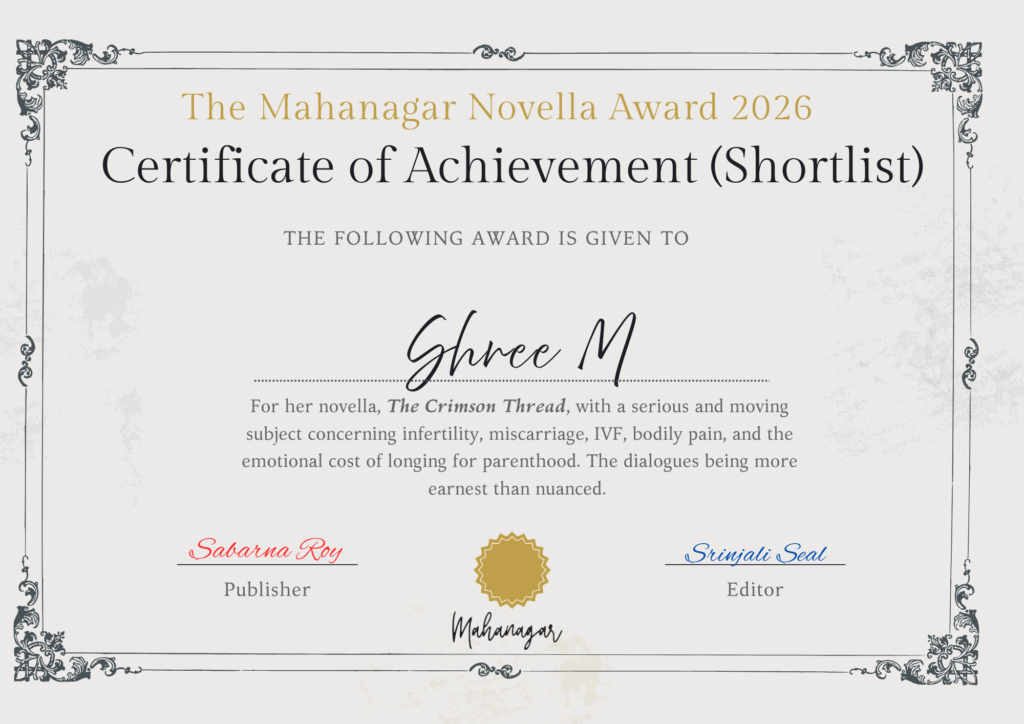
Why it ranks fifth: the subject is serious and moving—infertility, IVF, miscarriage, adoption, bodily pain, and the emotional cost of longing for parenthood—but the execution is more repetitive and explanatory than the others, with dialogue and plotting that feel more earnest than nuanced.
Final descending order by aggregate score:
Kalboishakhi → Summer-Smith → Whispers in the Dark → Kholosh/Slough →The Crimson Thread